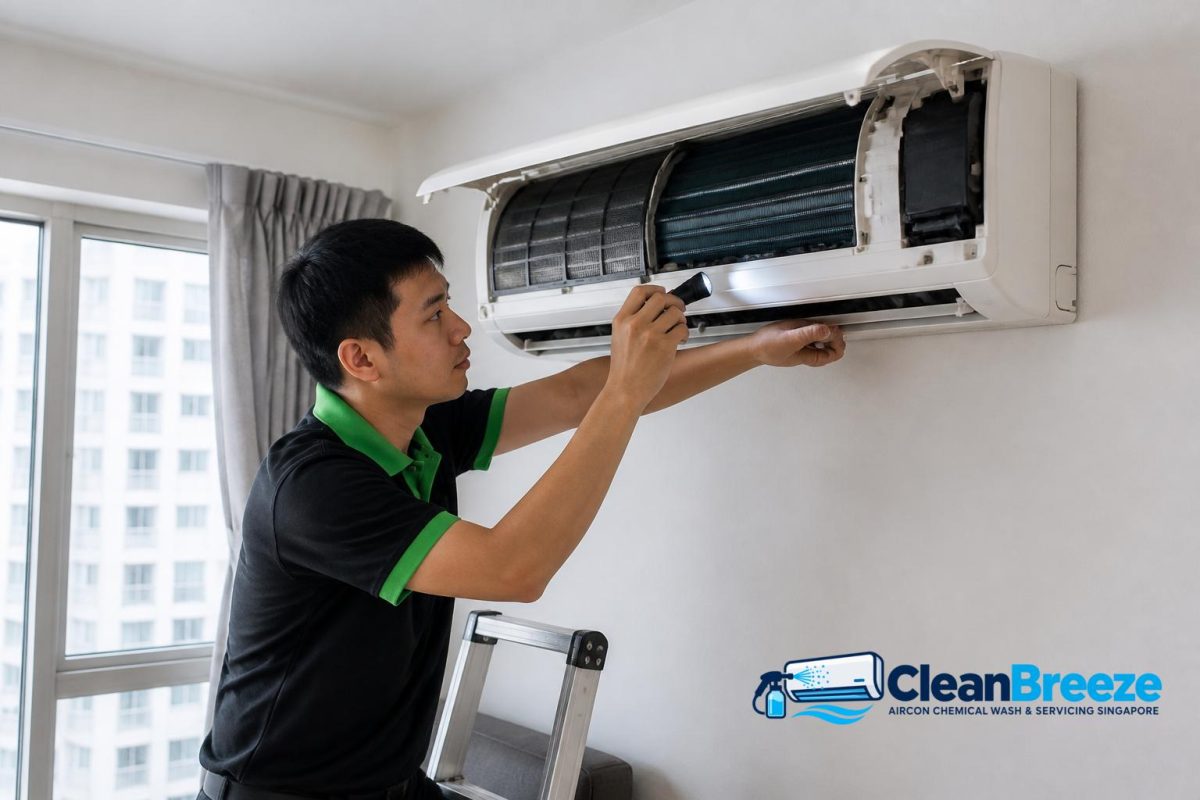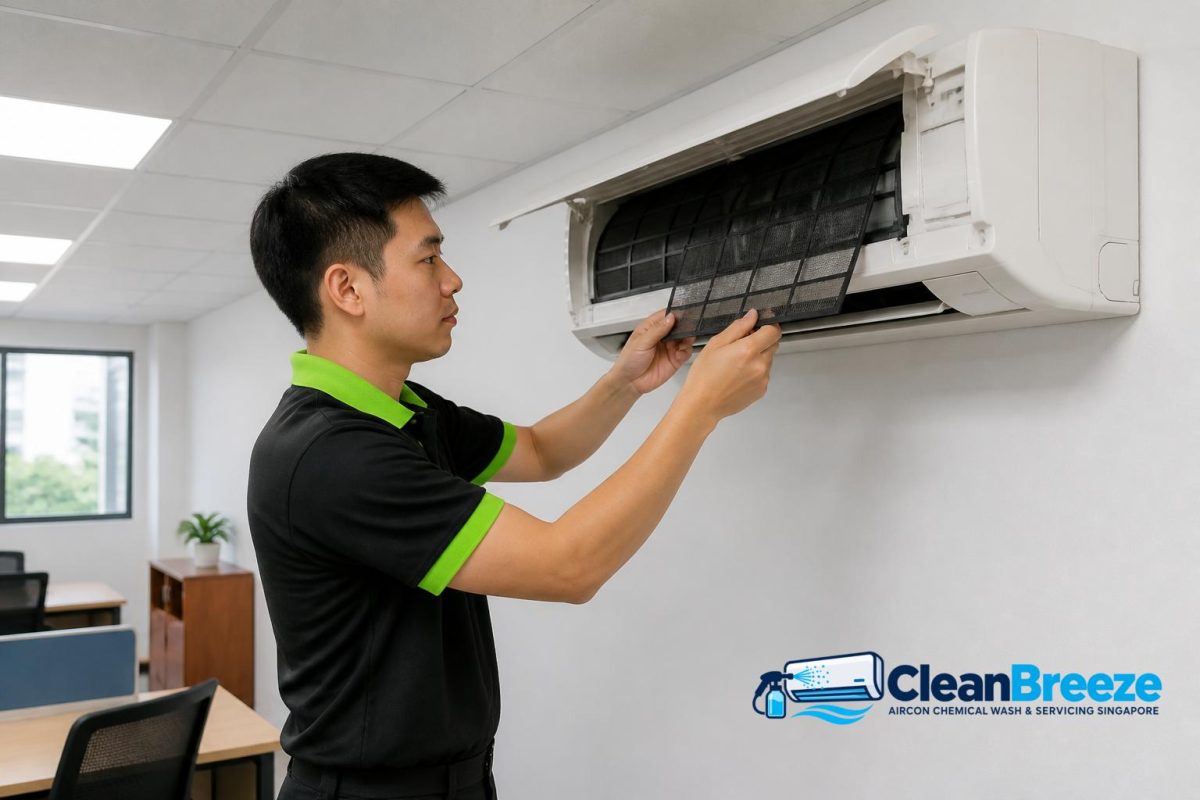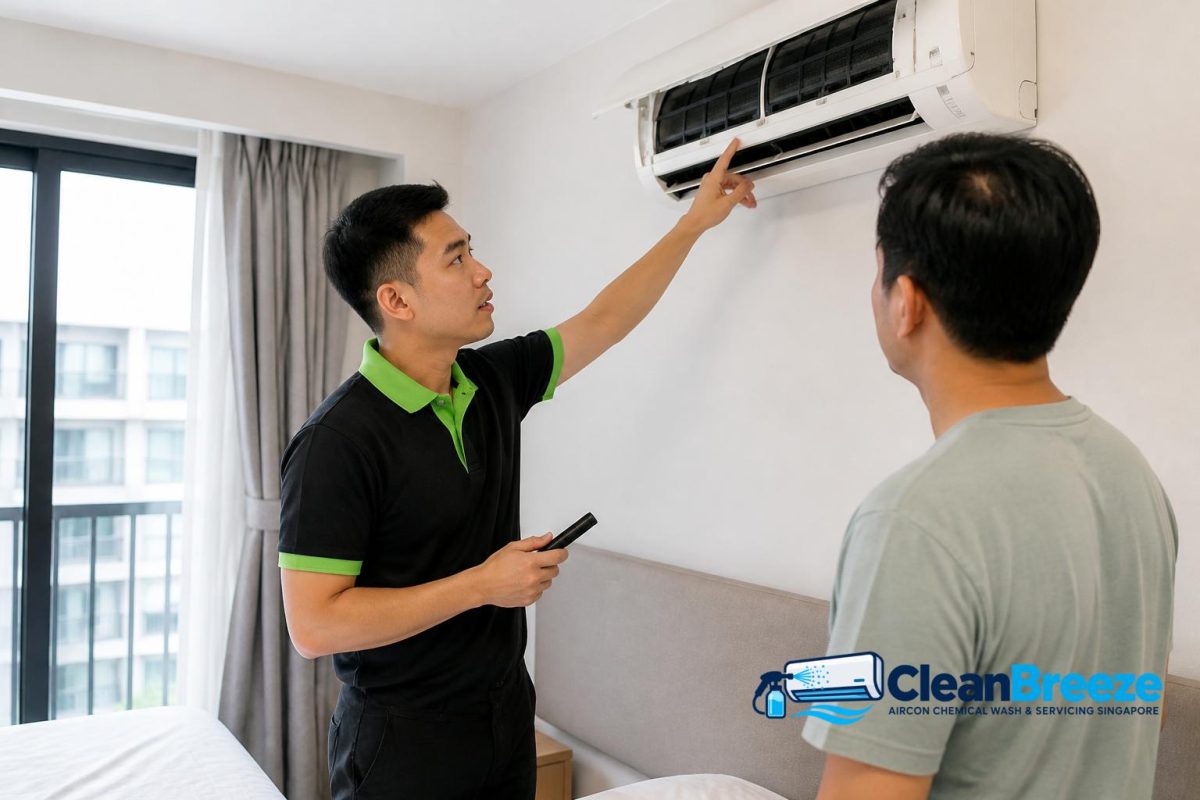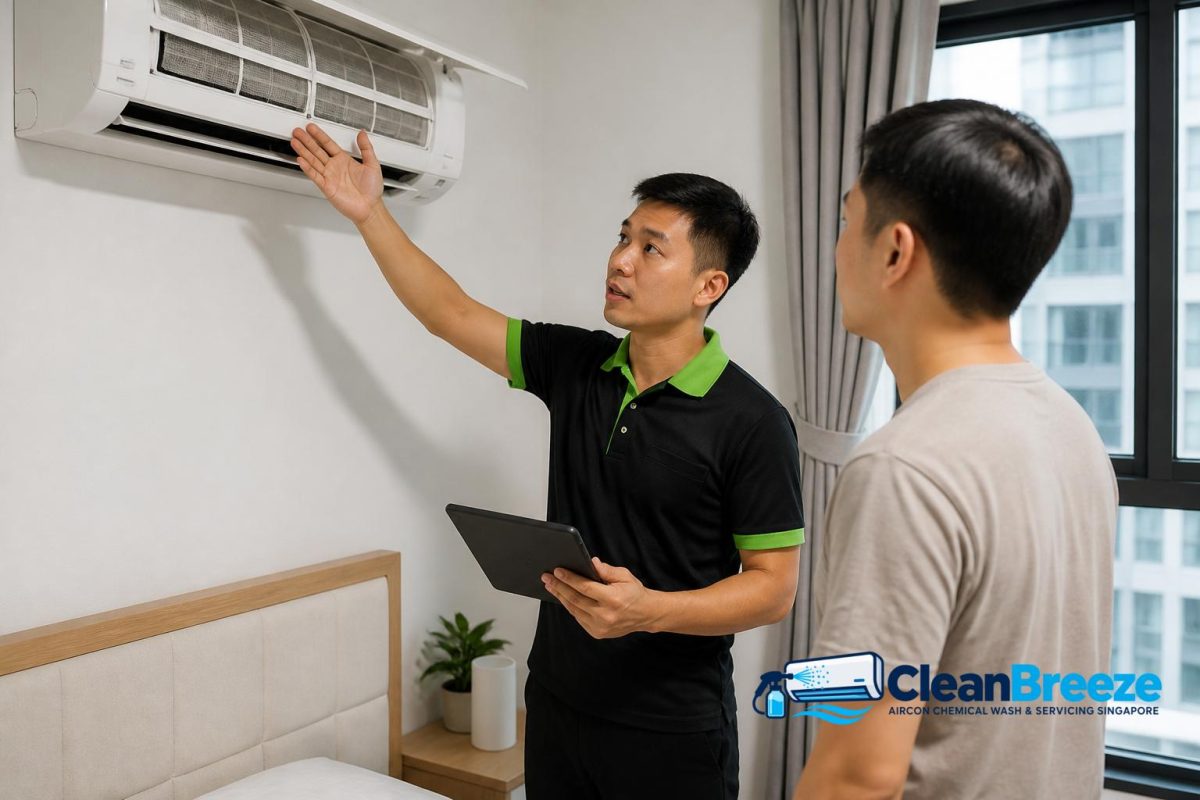
For a one-unit aircon chemical wash in a Singapore HDB flat, the time taken usually depends on the unit’s condition, the type of indoor unit, and how thorough the assessment is before work begins. It is not simply a case of spraying and wiping; a proper chemical wash is a controlled in-place process with protective setup, careful cleaning of internal components, and a final check to make sure the unit is put back properly.
What affects the time for one unit
The short answer is that a single unit chemical wash can take longer than routine servicing because more components are opened, protected and cleaned more deeply. In an HDB home, accessibility also matters. A wall-mounted unit in a living room with clear access is usually faster to work on than a unit placed above built-in cabinets, near curtains, or in a tight corner.
Condition is another key factor. If the indoor unit has heavy dust build-up, sticky residue, odour complaints, or drainage concerns, the technician may need more time for inspection, setup and cleaning. If the unit is relatively manageable, the process is still detailed, but less time may be needed than for a neglected system.
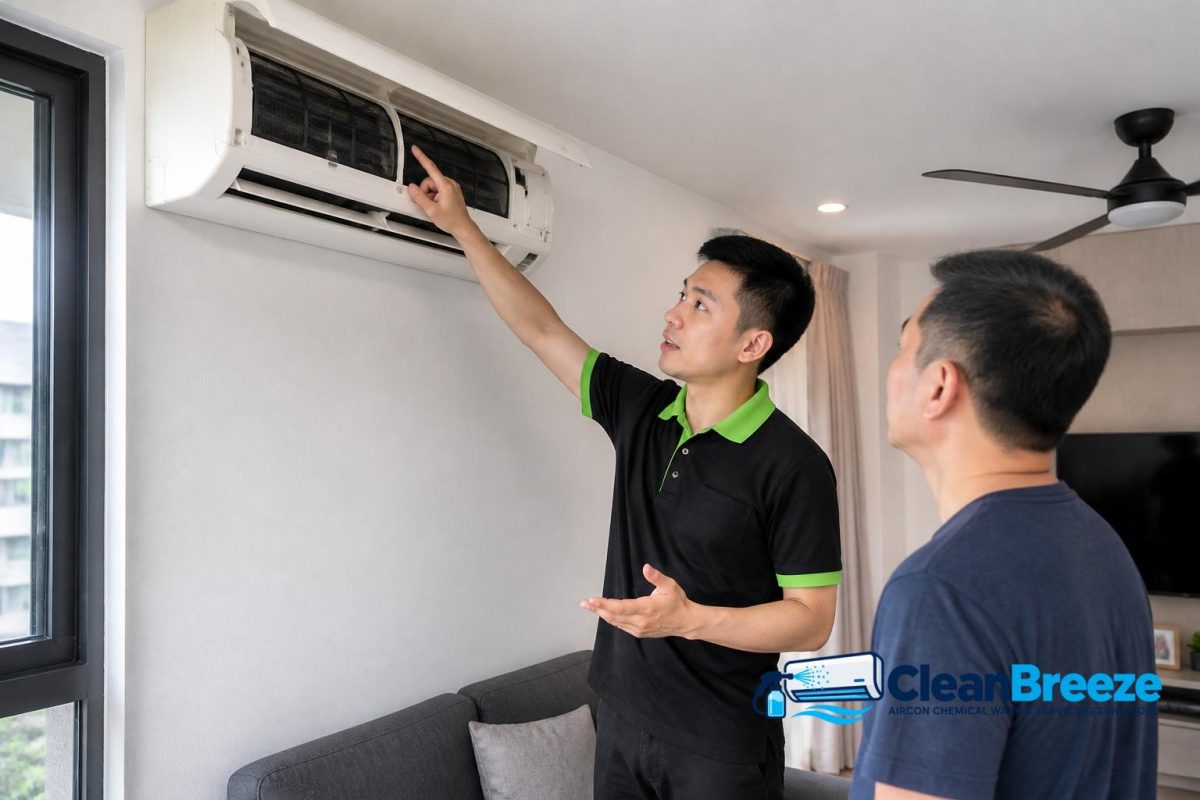
The important point is that time should be linked to assessment, not guesswork. A reputable service will look at the unit first and match the scope of work to its condition rather than automatically recommending a more intensive procedure.
How a chemical wash is different from routine servicing
Routine aircon servicing usually covers accessible cleaning such as filters, louvers, drainage checks, and general inspection. It is suitable when the unit is still in decent condition and simply needs normal upkeep. A chemical wash goes deeper, because it is intended for internal areas that cannot be cleaned properly through surface servicing alone.
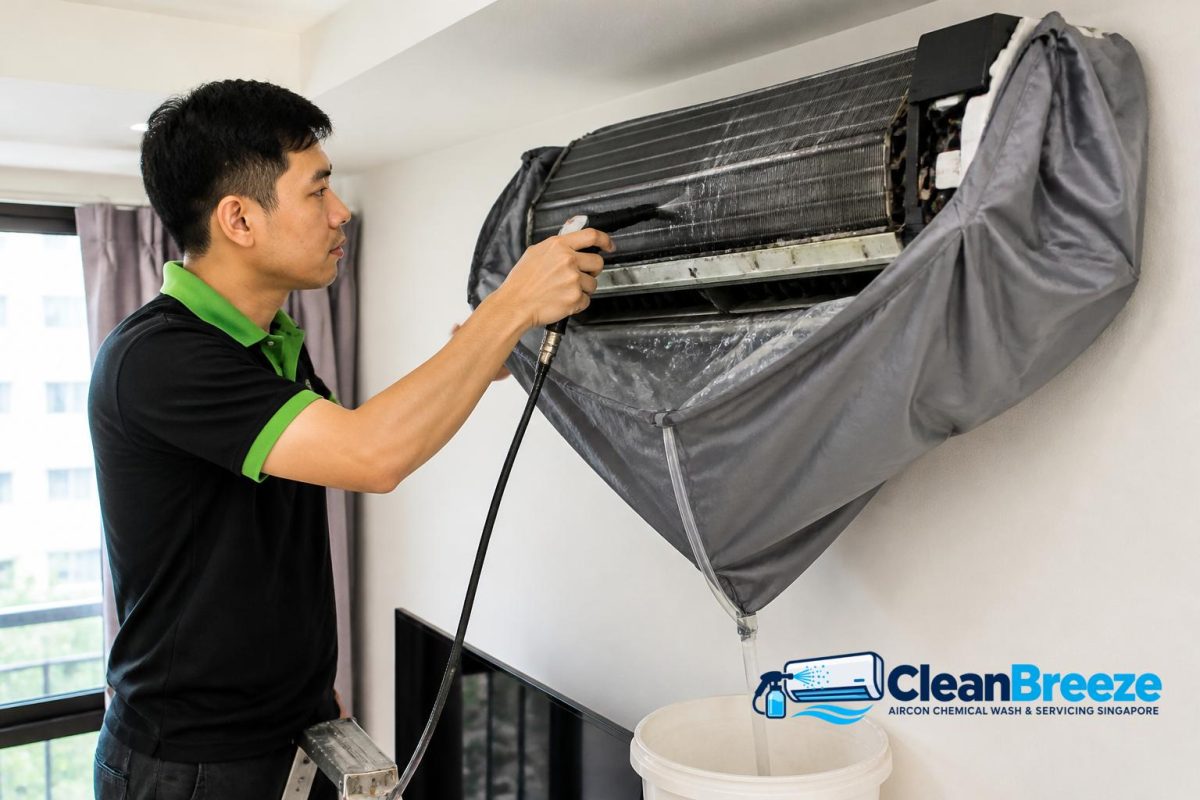
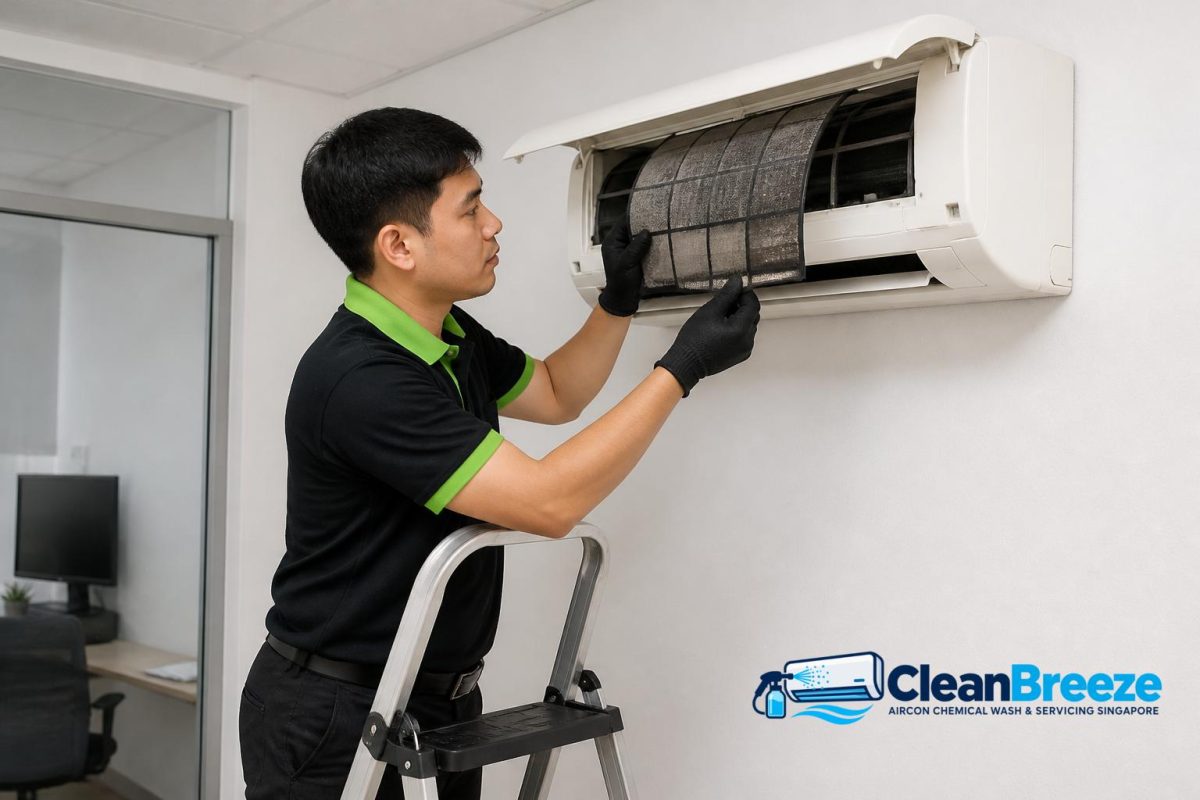
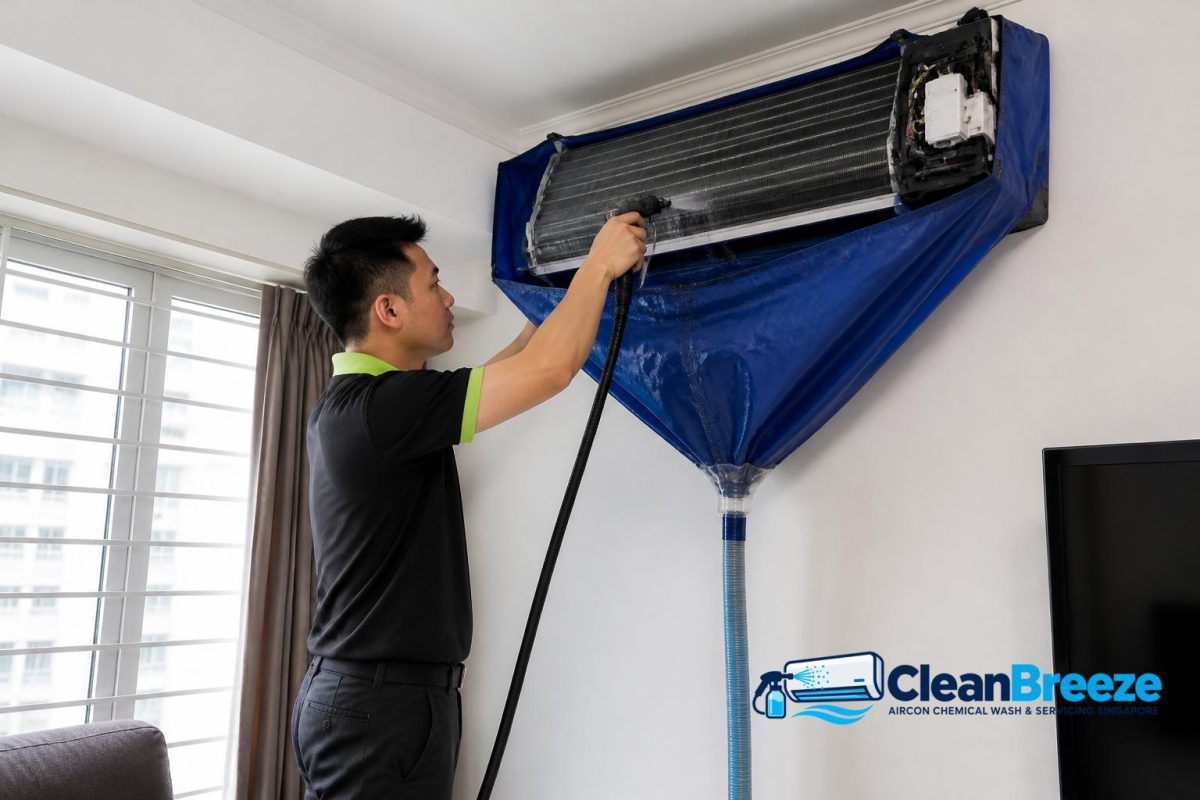
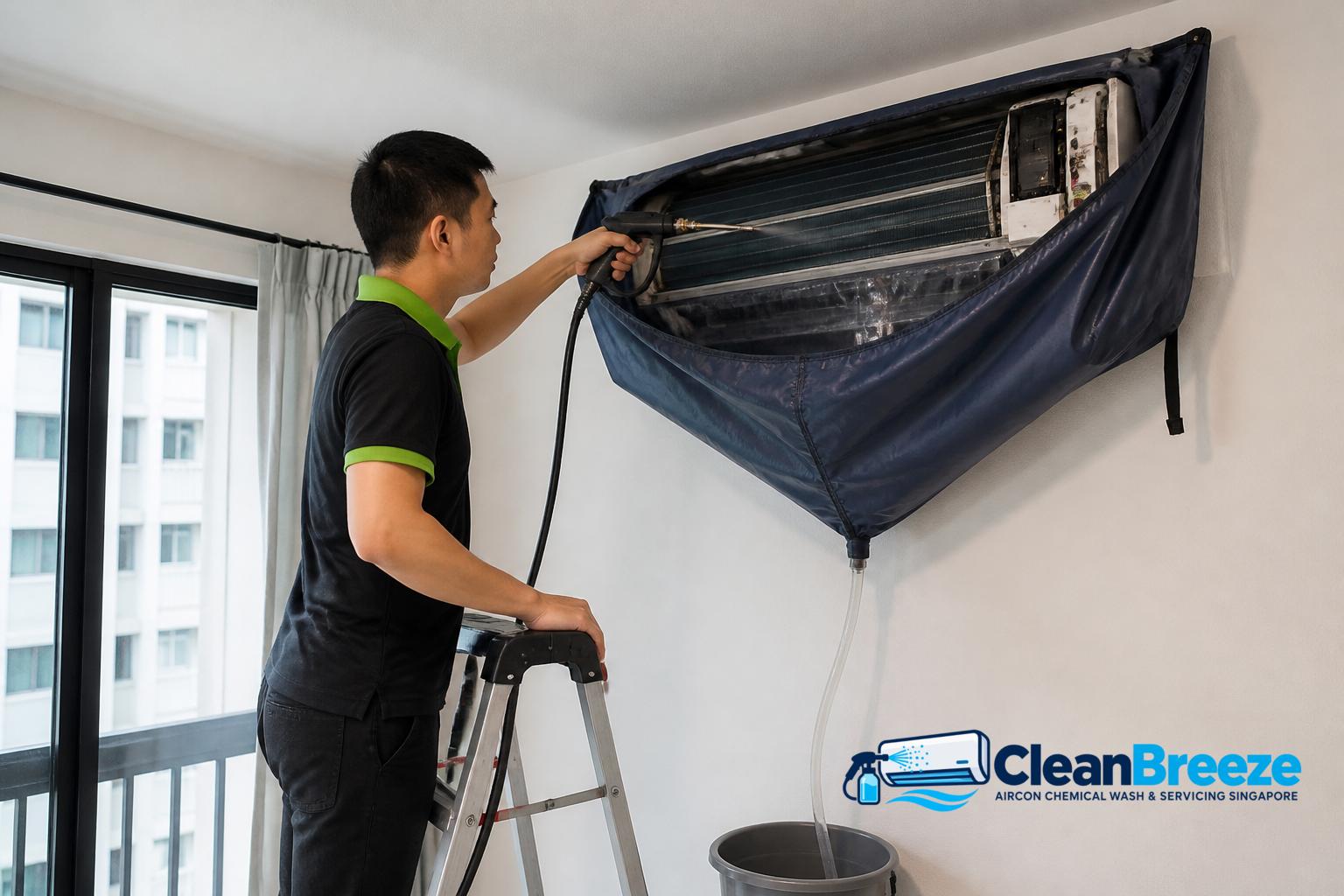
In a chemical wash, protective measures are put in place so the work can be carried out in situ. The technician may access the indoor unit’s internal sections, apply suitable cleaning methods, and flush away residue carefully. This is more involved than a regular wipe-down, but it is still not the same as removing serviceable components for an overhaul.
For many HDB households, the decision comes down to whether the unit only needs routine servicing or whether build-up has reached a level where a deeper in-place wash is more appropriate. That decision should be made after inspection, not before.
What is typically involved during the work
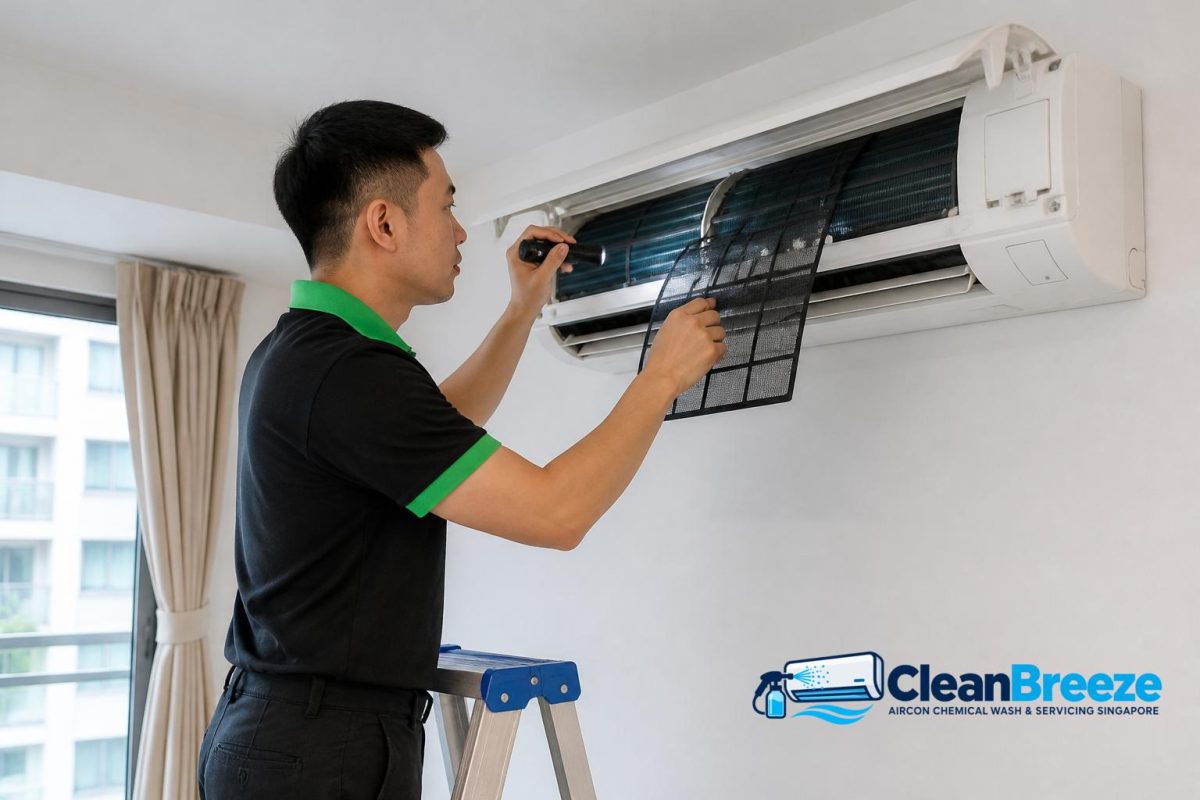
Before starting, the technician normally checks the unit’s condition and prepares the surrounding area. In an HDB flat, this matters because the home layout is often compact, and the job should be done neatly with proper protection for walls, flooring and nearby furniture.
The process may involve removing and cleaning accessible parts, protecting electrical and nearby areas, and using appropriate tools for flushing internal sections. Technicians may use a wash bag or similar containment setup so the cleaning water and residue are directed safely. The aim is to clean the internal system without causing unnecessary mess in the home.
After the chemical wash, the unit is reassembled, tested and observed. A proper follow-up check helps confirm whether the unit is draining as expected and whether cooling airflow is coming through normally. The work should be methodical, especially when only one unit is being handled and the homeowner wants the room usable again as soon as possible.
Why the time can vary in Singapore HDB flats
In Singapore HDB flats, room size is usually not the main issue for a one-unit chemical wash. The more relevant factors are installation height, access around the indoor unit, the amount of dust or residue present, and whether the unit is in a bedroom, living room or study with limited working space.
If the flat has built-in carpentry below the unit, a narrow ledge, or fragile nearby items, the setup may take longer because the work area needs to be secured properly. In some homes, homeowners also request extra care because of children’s rooms, study corners or furniture placement. That is reasonable, but it should be managed through preparation rather than rushed work.
The same general principle applies in condominiums and landed homes, although the access arrangement can differ. For a single unit, what matters most is not the property type itself, but whether the technician can safely and neatly complete the controlled wash on site.
When a deeper clean is sensible, and when it is not
A chemical wash is worth considering when routine servicing no longer feels sufficient and the unit shows signs that accessible cleaning alone may not address. This could include persistent odour, visible internal contamination, uneven airflow, or drainage that needs closer attention. These are symptoms to assess, not proof of a specific fault.
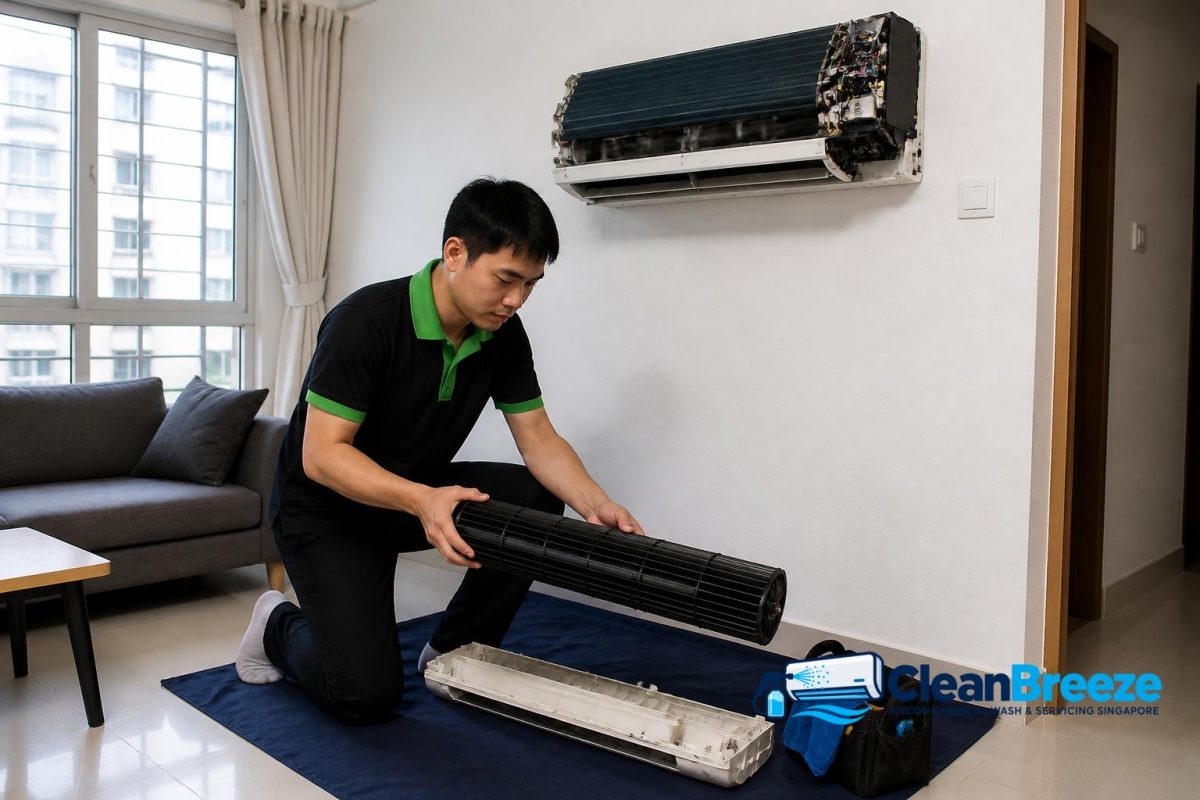
At the same time, not every unit needs a chemical wash. Some systems only require routine servicing and proper maintenance. Others may need a more extensive chemical overhaul if the condition justifies removal of serviceable components for more thorough cleaning. That is a separate decision and should not be assumed by default.
A good provider will explain the difference clearly and recommend the lightest appropriate method. For homeowners, that usually means asking what was observed, what can be cleaned in place, and whether the unit truly needs a deeper procedure at this stage.
What to expect on timing, pricing and quotation
Because each unit condition is different, time and price are usually best given after an assessment rather than as a one-size-fits-all promise. A single-unit chemical wash may take longer if the unit is heavily soiled, awkwardly placed or requires extra preparation. If the unit is straightforward and accessible, it may be completed more efficiently.
Quotation factors commonly include the unit’s condition, the cleaning depth needed, accessibility, and whether any additional protective measures or follow-up work are required. For homeowners comparing options, it is sensible to ask exactly what the quoted scope covers, whether it is a chemical wash, chemical cleaning, routine servicing or a more intensive overhaul, and whether the recommendation is based on inspection.
For maintenance contracts or servicing contracts, the key question is always scope. Ask what is included for recurring visits, whether chemical work is part of the plan or charged separately, and how the provider decides when a deeper treatment is necessary. That keeps expectations clear and avoids paying for work you may not need.
If you would like CleanBreeze Aircon Chemical Wash & Servicing Singapore to assess your one-unit aircon chemical wash, WhatsApp us with the symptoms, age, condition, unit count and property type so we can advise on the right cleaning level before recommending any deeper treatment.
Conclusion
For one aircon unit in a Singapore HDB flat, the time for a chemical wash is best understood as a condition-based job rather than a fixed duration. The actual time depends on access, build-up, preparation and the care taken during the in-place process. The most practical approach is to start with assessment, then choose the right level of cleaning only if the unit truly needs it.
Routine servicing remains suitable for many homes, while chemical wash is better reserved for units that need deeper internal cleaning. If the condition is more serious, a chemical overhaul may be discussed separately, but it should not be assumed automatically. Clear assessment leads to better decisions, clearer quotations and more appropriate care for the unit.
Choose CleanBreeze Aircon Chemical Wash & Servicing Singapore
CleanBreeze Aircon Chemical Wash & Servicing Singapore provides professional aircon chemical wash, aircon chemical overhaul and aircon cleaning for residential and commercial air conditioning units. Our team handles different levels of cleaning based on the condition of each unit, from removing accumulated dirt and dust to carrying out more thorough treatment for heavier buildup. Regular aircon servicing and aircon maintenance are also available to support the ongoing upkeep of air conditioning units. These services help keep important aircon components cleaner while supporting better airflow and more consistent cooling performance.
CleanBreeze Aircon Chemical Wash & Servicing Singapore assesses the condition of each unit before recommending a suitable service based on its cleaning and servicing requirements.Check our blog for practical information on aircon-related services, and explore our portfolio to view examples of completed services across Singapore. For servicing or cleaning enquiries, WhatsApp us at +65 8241 0032 to speak with our team.
Frequently Asked Questions
How long does one unit chemical wash usually take in an HDB flat?
The time varies by unit condition, accessibility and the amount of internal build-up. A simple one-unit job may be fairly straightforward, while a dirtier or harder-to-access unit will take longer. An inspection is the best way to estimate the time more accurately.
Is a chemical wash the same as routine servicing?
No. Routine servicing usually covers accessible cleaning and checks, while a chemical wash is a deeper in-place treatment for the unit’s internal sections. It is only recommended when the unit’s condition suggests that normal servicing is no longer enough.
Will every badly performing unit need a chemical overhaul instead?
Not necessarily. A deeper treatment should only be recommended after assessment. Some units may need a chemical wash, some may only need routine servicing, and some may justify a more intensive overhaul if the condition supports it.